
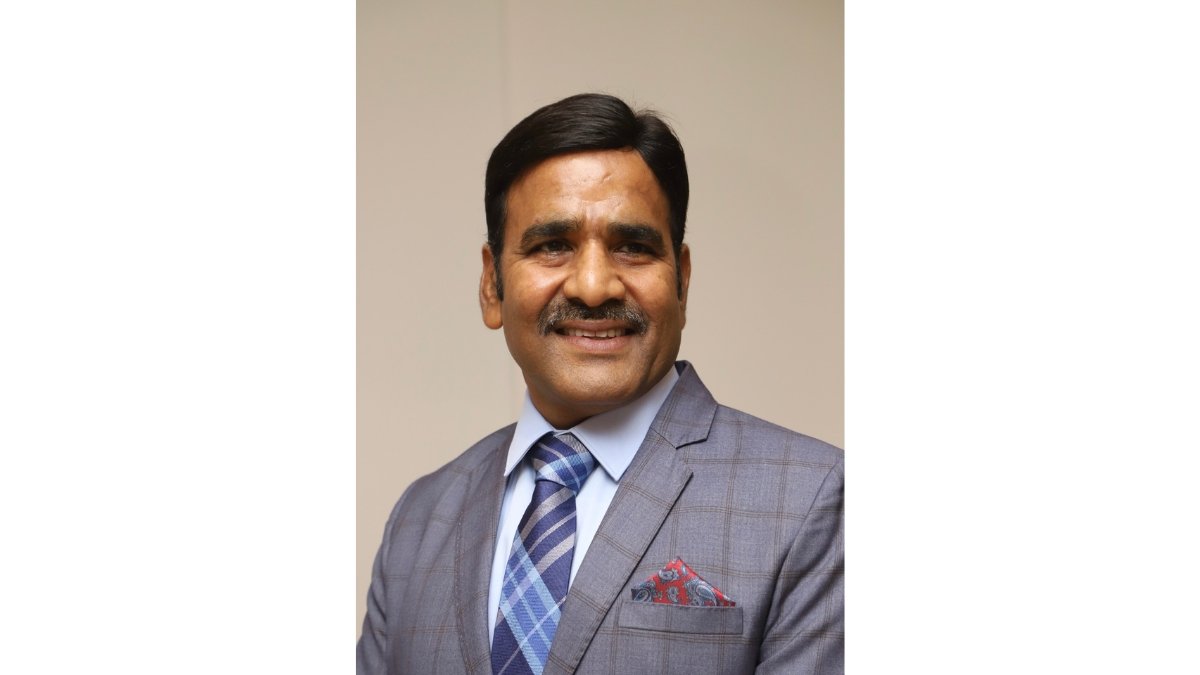
Mr Sanjay Mehta, President, MRAI
Jaipur (Rajasthan) [India], January 19: The Material Recycling Association of India (MRAI), the apex body representing India’s material recycling industry, has announced the 13th edition of its flagship event, the International Material Recycling Conference & Exposition (IMRC 2026), scheduled to be held from January 20–22, 2026, at the Novotel Jaipur & Convention Centre, Jaipur.
The conference will focus on key themes, including sustainability, climate change, energy storage, and circular economy transitions, while also addressing long-standing structural challenges such as the absence of formal industry status for recycling in India, regulatory clarity, and market stability. IMRC 2026 is expected to serve as a critical policy and industry platform as recyclers seek clearer frameworks to support scale, investment, and compliance.
IMRC 2026 will be greeted with messages from Shri Piyush Goyal, Hon’ble Minister of Commerce and Industry, and Shri Bhupender Yadav, Hon’ble Minister of Environment, Forest and Climate Change, Government of India.The Ministry of Environment, Forest and Climate Change (MoEFCC) will be represented by Shri V. K. Singh, Director, while policy perspectives will be contributed by senior officials and programme leaders from NITI Aayog, including Maj Gen K. Narayanan, Program Director (Senior Consultant – Law/Security), Shri Priyavrat Bhati, Program Lead, MsPrinhila Gandhi, Young Professional, and Mr Abhijeet, Consultant.
Regulatory participation will include Smt Deepti Kapil, Additional Director, and Shri G. Thirumurthy, Director and Divisional Head, from the Central Pollution Control Board (CPCB), covering end-of-life vehicles, batteries, used oil, tyres, and urban pollution control. The Bureau of Indian Standards (BIS) will be represented by Shri Vishal Kumar Rana, Deputy Director, Shri Virendra Singh, EEDC Head, and Dr Lalit Yadav, Scientist, EEDC Division.
Officials from the Ministry of Electronics and Information Technology, including Shri Surendra Kumar Gotherwal, Scientist E, and Smt Sunita Verma, Group Coordinator, along with Shri Vinamra Mishra, Director, from the Ministry of MSME, will also participate. Representation will further include Shri Mayank Tyagi, Director, Ministry of Road Transport and Highways; Shri Vivek Kumar Sharma, Director, Ministry of Mines; Shri Rajesh Kumar, Deputy Secretary, DPIIT; and Shri S. R. Meena, General Manager, SIDBI.
The conference will also see participation from state governments, including Mr Abhishek Anshu Kumar, Department of Industry, Government of Bihar; Shri Dr P. Krishnaiah, Chairman, APPCB, Andhra Pradesh; and Shri Purushottam Sharma, Transport Commissioner, Rajasthan, alongside leading academics such as Dr Anupam Agnihotri, Director, Jawaharlal Nehru Aluminium Research Development and Design Centre (JNARDDC).IMRC 2026 is expected to bring together over 2,500 delegates from more than 50 countries, including around 450 international participants, reinforcing India’s growing centrality in global scrap trade and secondary raw material supply chains.
Shri.Sanjay Mehta, President, MRAI, said, “Recycling in India is no longer a peripheral activity; it is central to resource security, climate commitments and manufacturing competitiveness. Yet the industry continues to operate without formal industry status, fragmented by unorganised players and regulatory ambiguities. IMRC 2026 will bring these realities to the forefront and push for practical, data-backed policy solutions.”
Shri. Dhawal Shah, Senior Vice President, MRAI, added, “From GST compliance to scrap import policies, the Indian recyclers today face operational friction that directly impacts costs and global competitiveness. IMRC 2026 is structured to enable honest dialogue between industry, regulators and global experts so that India’s recycling ecosystem can move towards predictability and scale.”
Shri.Amar Singh, Secretary General, MRAI, noted, “IMRC 2026 has been designed as a structured platform for policy engagement and industry alignment. The conference will bring together stakeholders across the value chain to deliberate on regulatory challenges, trade dynamics and sustainability priorities, with the objective of translating discussions into actionable outcomes for the recycling ecosystem.”
Representing recyclers across ferrous and non-ferrous metals, aluminium, copper, zinc, e-waste, ELVs, plastics, paper, batteries, tyres, and used oil, MRAI has positioned IMRC 2026 as more than an industry gathering. The conference aims to amplify the collective voice of recyclers on long-pending structural issues such as industry status for recycling, rationalisation of scrap import duties, GST compliance challenges, and the need to curb unorganised and informal operations that distort markets.
One of the central themes of IMRC 2026 will be raw material security for Indian recyclers, particularly the availability of quality scrap. While India is often perceived as scrap-rich, industry leaders argue that domestic availability remains inadequate, making imports critical for capacity utilisation. Recent reductions in import duties on certain non-ferrous scrap categories have provided relief, but aluminium scrap continues to attract higher duties, an issue MRAI intends to take up strongly during the conference through structured policy discussions.Beyond trade and taxation, IMRC 2026 will also focus on sustainability and climate-linked transitions, including energy storage, critical minerals, battery recycling, carbon markets, ESG compliance, and end-of-life vehicle (ELV) implementation. These discussions come amid tightening environmental norms and India’s push towards circular economy frameworks across sectors.
Over the past decade, MRAI has organised twelve IMRC editions across India and three international business summits in Southeast Asia, steadily building consensus between industry and government. The IMRC 2025 edition in Jaipur saw participation from over 2,500 delegates, including nearly 1,000 international participants, underscoring India’s growing relevance in global scrap and secondary raw material flows. IMRC 2026 is expected to scale up further, with 3,000+ delegates and 200+ exhibitorsfrom India and overseas.
Despite its growing role in resource security, employment, and climate action, India’s recycling sector still lacks formal industry status. Employing nearly 1.75 million people and contributing around 2 % of GDP, the sector faces limited access to finance, infrastructure support, and long-term policy visibility. Organised recyclers note that 1.5 to 4 million informal workers dominate much of the value chain, often outside tax and compliance frameworks, creating cost imbalances. While selective reductions in import duties on non-ferrous scrap signal gradual policy change, recyclers stress that formal industry recognition is critical to scale capacity, attract investment, and advance India’s circular economy ambitions, especially as less than 50 % of India’s 1.7 million tonnes of e-waste is formally processed.
Looking ahead, IMRC 2026 is expected to play a catalytic role in shaping the next phase of India’s recycling ecosystem. The policy recommendations, industry insights and global best practices emerging from the conference are likely to inform national discussions on sustainable manufacturing, resource efficiency and climate action, reinforcing recycling as a strategic pillar of India’s long-term growth and circular economy ambitions.
If you have any objection to this press release content, kindly contact pr.error.rectification@gmail.com to notify us. We will respond and rectify the situation in the next 24 hours.